DSCR Investment Property Loans

Rental income. The right financing fit.

A DSCR loan uses a rental property’s income to help qualify for investment-property financing. We built this guide around a few lenders we regularly use, but more options may be available. With non-QM loans, small details in your situation can make a big difference in which lender fits best. We work with a handful regularly and may establish a new lender relationship when a unique situation calls for it. These loans are not priced in our website’s rate engine; request a Pro-Quote for a personalized comparison.

What it is.

Business-purpose financing for a non-owner-occupied rental property. Debt service coverage ratio (DSCR) compares the property’s qualifying rent with its qualifying monthly payment, instead of using a standard personal-income debt-to-income calculation.

Purchase, rate-and-term refinance, and business-purpose cash-out options are available. The reviewed options include loans up to $2 million, with selected larger-loan programs reaching $4.5 million under stricter requirements. Maximums cannot be combined across programs.

Conventional first. DSCR when it fits.

Before recommending DSCR, we explore whether conventional financing makes more sense. That includes taking the time to understand your tax returns and qualifying income. A complicated income picture should not automatically push you into a different loan program.

A similar rate does not always mean similar terms. A DSCR quote may include a prepayment penalty to achieve that rate. Simpler documentation alone is not a reason to choose it. We compare rates, points, closing costs, and the cost of selling or refinancing early before recommending a program.

Compare quotes with clear assumptions.

Our starting point: 20% down and a 1.00 DSCR, with a conversation about prepayment penalties first. We ask how long you expect to keep the loan and which prepayment terms, if any, you would accept. This is a comparison baseline, subject to lender eligibility—not an assumption that every property qualifies.

Pricing may improve with a stronger DSCR, such as 1.25 or higher, with discount points paid upfront, or with a prepayment penalty. When shopping, ask what rental coverage, down payment, points, and penalty were used in the quote. An attractive rate based on best-case assumptions may not match your property or the terms you are comfortable accepting.

Get qualified first. Then shape your offer.

Start with the down payment you have available. We review your qualifications and available funds, allow for closing costs and required reserves, and estimate a purchase-price range using likely financing terms and rental-income assumptions. Before you make an offer, we compare that property’s expected qualifying rent with its projected payment and help you shape the offer around those numbers.

Making an offer before checking the financing can lead to an unwelcome surprise: substantially more money down than expected, or a mortgage payment the rent does not cover. A lower purchase price, more money down, or a different loan option may be needed. A higher rate also raises the qualifying payment and can reduce DSCR.

Some options allow as little as 15% down, but pricing reflects the higher leverage. These are additional options beyond the example matrices summarized here. The property, credit profile, rental coverage, and other lender requirements must qualify. Do not assume the lowest down payment comes with the lowest rate.

Below-1.00 DSCR can be a fallback, not a substitute for planning. Options down to 0.75 may help when rent falls short, but pricing and down-payment requirements can change. Compare that option with a lower offer price or more money down before deciding.

We can review your buying parameters before you shop. Final approval and pricing still depend on the selected property, verified rental income, appraisal, and lender review; an early estimate does not lock a rate.

How it works.

Start with qualifying rent. The lender determines which lease, appraised market rent, or eligible short-term rental history can be used. Purchase and refinance calculations can differ.

Compare rent with the qualifying payment. This generally includes principal, interest, taxes, insurance, and association dues (PITIA). Eligible interest-only options use the lender’s interest-only calculation. For example, $2,400 in qualifying rent divided by a $2,000 qualifying payment equals a 1.20 DSCR.

Below 1.00 does not always mean no. A ratio of 1.00 means qualifying rent equals the qualifying payment. Some reviewed options allow ratios as low as 0.75, with different credit, down-payment, and loan-size limits. Short-term rental and larger-loan options can require higher ratios.

The advertised maximum LTV is a best-case ceiling. Your required down-payment percentage depends in part on whether the property meets the lender’s DSCR requirement at the proposed price and rate. Some additional options allow up to 85% loan-to-value (15% down), with pricing reflecting the higher leverage. The reviewed example matrices generally top out at 80% purchase LTV. Rent, credit, reserves, loan size, and property restrictions may require a smaller loan and more money down. DSCR does not measure every operating expense or guarantee a profitable investment.

Credit scores can start at 640 on a reviewed option. Other reviewed options start at 660 or higher, and the required score depends on DSCR, loan amount, property, and transaction. A 640 score does not qualify for the maximum LTV: the reviewed 640-score purchase tier allows up to 75% LTV (25% down) at DSCR of at least 1.00, with lower limits below 1.00. The lowest score and lowest down payment are not necessarily available together.

Then we verify the rest of the file. Credit, housing history, assets, reserves, appraisal, rental documentation, property eligibility, and the business purpose still require review. DSCR is a different way to qualify—not a no-documentation loan.
Who it’s for.

Investors buying or refinancing eligible rental properties when a conventional loan does not fit their income documentation, portfolio, ownership structure, or financing goals. First-time investors may qualify with some lenders; other options require landlord experience.

This is business-purpose financing for investment property, not a primary residence or personal vacation home. Eligible options can include 1–4-unit properties, condos, and short-term rentals, subject to the selected lender’s rules.

The small details help us find the right solution. Rental coverage, property type, recent renovations, credit history, cash-out plans, reserves, and landlord experience can change which lender works. One may accept DSCR below 1.00; another may offer a better fit for a particular property or larger loan.

Foreign national documentation varies, too. One reviewed option asks for three established accounts and may count housing history as a tradeline. Another foreign national option described on our site has no minimum foreign-credit tradeline requirement and documents residence abroad. We check the exact documentation path rather than assuming every lender works the same way. Explore Foreign National loans →

Individual or entity ownership. Depending on the lender, program, and state, an LLC or another eligible entity may be permitted or required. Personal guarantees may still apply. We confirm title and deed requirements with your closing attorney or title company.

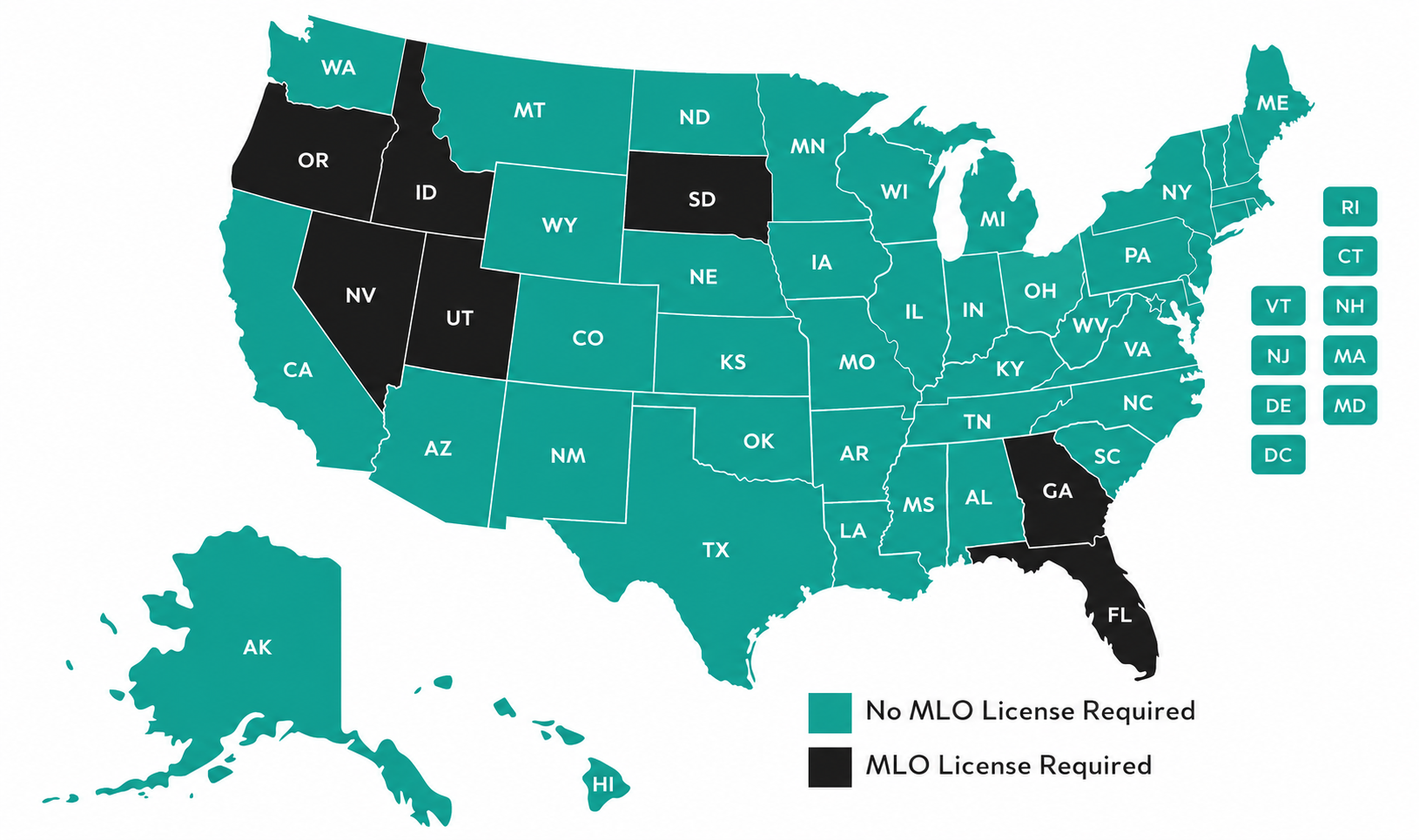
Investment opportunities beyond NC, SC, and FL. Business-purpose options may be available in additional states. The lender-supplied map below is a starting point for reviewing your property’s location, not a promise that every DSCR program is available in every highlighted state.

Quick numbers.

Occupancy: Rental investment property only, including eligible short-term rentals. No primary residence or personal vacation home.

LTV at a glance — DSCR
TransactionPotential maximum LTVDown payment / equity
Purchase80% reviewed examples; 85% select additional options20% down; 15% on select options
Rate-and-term refinanceUp to 80%; some reviewed options cap at 75%20%–25% equity at these caps
Cash-out refinanceUp to 75%At least 25% equity

Credit, DSCR, loan size, property, and lender determine your actual limit. A 640 score does not qualify for every maximum above. Lower DSCR may require more equity; the lowest score, lowest DSCR, and highest LTV cannot be combined automatically. Cash proceeds are reduced by payoffs, costs, and any existing prepayment penalty.

Lender-provided business-purpose MLO licensing map. Teal: no MLO license required according to the supplied map. Charcoal: Oregon, Idaho, Nevada, Utah, South Dakota, Georgia and Florida require an MLO license.
Business-purpose MLO licensing map supplied by one of our lenders. Coverage and property restrictions vary by lender and program. MLO licensing categories alone do not establish company licensing or loan eligibility. We confirm the requirements for your property’s location. Tap to enlarge.

Pros and cons.

Pros

  • Rental income can provide another qualification path. Useful when conventional financing does not fit after a careful income review.
  • Options with as little as 15% down. Some additional lender options may allow 85% purchase LTV for eligible scenarios, with different pricing. The example matrices reviewed here generally allow up to 80% purchase LTV.
  • Below-1.00 DSCR options. Some programs offer additional flexibility, with lower LTV limits and other conditions.
  • Different property and ownership options. Eligible condos, short-term rentals, and entity ownership can be considered with the right lender.
  • Multiple financing structures. Fixed-rate and selected adjustable-rate or interest-only options allow a comparison around your investment plans.

Cons & considerations

  • Rates and points can increase costs. DSCR may cost more than conventional financing. Buying down the rate with discount points increases upfront costs; compare the break-even period with how long you expect to keep the loan.
  • Prepayment penalties can change the comparison. A seemingly similar rate may include a penalty for a sale, refinance, or large principal payment. Penalty-free options may have different pricing, and availability depends on the program and state.
  • More cash may be needed. Down payment, closing costs, and reserves are separate requirements. Some options require six months of reserves; the reviewed larger-loan option requires 18 months.
  • Rent can limit borrowing. Maximum LTV is not a guaranteed loan amount. Short-term rentals, vacant properties, and smaller rent coverage can face different rules.
  • Program limits are specific. The reviewed larger-loan option requires at least 1.25 DSCR for long-term rentals or 1.35 for short-term rentals, plus two years of landlord history. Geographic and property restrictions also apply.

Examples reflect selected lender summaries, not every available option. Current guidelines, pricing, availability, and final terms must be confirmed for your complete scenario.

Ready for professional guidance?

Start your Pro-Quote.

Vincent will provide a professionally structured quote and personalized consultation. Begin the short, secure inquiry. This is not a full mortgage application.

Understand your options

A little clarity. Better comparisons.

Understand rental coverage, conventional comparisons, down payments, lender differences, and prepayment terms before choosing your investment-property loan.

DSCR Questions

Maximum LTV and loan amount depend on DSCR, loan size, transaction, property, and location. Points and prepayment terms depend on available pricing and the final loan documents.